Platform
Platform
Compensation Management
Advisor Payout Automation for RIAs
Calculate advisor payouts in minutes. No more spreadsheet chaos.

The Problem
Your Compensation Is Compensating for Nothing
Month-end is coming. Time to calculate advisor payouts.
Smith gets 90% on everything over $10K. Unless it’s insurance. Then it’s 75%. But not on renewals. Those are 85%. Unless he hit his quarterly bonus threshold. Then it’s different.
Johnson has a different grid.
Plus overrides on her team’s production. Plus a retention bonus that vests monthly. Plus that one-off deal you made last year.
Williams just joined.
New grid structure. Transition bonuses. Draw against future commissions. None of your formulas work.
By the time you figure it out, it’s next month.
What's Really Broken
Every Exception Breaks Your System
Grid Chaos
Forty advisors, forty different compensation plans. Stored in your head, scattered across spreadsheets, buried in contract folders.
Manual Everything
Calculate each payout by hand. Double-check the math. Triple-check the exceptions. Still get it wrong.
Transparency Zero
Advisor calls asking why their check is different. You scramble to reconstruct your logic. Neither of you trust the answer.
Scale Impossible
Every new advisor means more complexity. More exceptions. More manual work. More mistakes.
Your growth is strangled by your compensation complexity.
What We Fix
Unified Control Over Every Approval Process
"/><stop offset="1" stop-color="rgb(255, 255, 255)"/></linearGradient><linearGradient id="yklVp0itg-4190863256-linear-gradient" x1="0.2338651437254083" x2="0.7661348562745918" y1="1" y2="0"><stop offset="0" stop-color="rgb(243, 244, 246)"/><stop offset="1" stop-color="rgb(255, 255, 255)"/></linearGradient><linearGradient id="w9eWQ9PNi-4190863256-linear-gradient" x1="0" x2="1" y1="0.6656085460782806" y2="0.33439145392171943"><stop offset="0" stop-color="rgb(243, 244, 246)"/><stop offset="1" stop-color="rgb(255, 255, 255)"/></linearGradient><linearGradient id="lpGUet_Zo-4190863256-linear-gradient" x1="0.10918208614294456" x2="0.8908179138570554" y1="1" y2="0"><stop offset="0" stop-color="rgb(243, 244, 246)"/><stop offset="1" stop-color="rgb(255, 255, 255)"/></linearGradient><linearGradient id="ofiodRVVI-4190863256-linear-gradient" x1="0.11110291840421316" x2="0.8888970815957868" y1="1" y2="0"><stop offset="0" stop-color="rgb(243, 244, 246)"/><stop offset="1" stop-color="rgb(255, 255, 255)"/></linearGradient><linearGradient id="xp7feCqRa-4190863256-linear-gradient" x1="0.23392045719424875" x2="0.7660795428057512" y1="1" y2="0"><stop offset="0" stop-color="rgb(243, 244, 246)"/><stop offset="1" stop-color="rgb(255, 255, 255)"/></linearGradient><linearGradient id="TmdoRBuCV-4190863256-linear-gradient" x1="0.2269312188375604" x2="0.7730687811624396" y1="1" y2="0"><stop offset="0" stop-color="rgb(243, 244, 246)"/><stop offset="1" stop-color="rgb(255, 255, 255)"/></linearGradient><linearGradient id="rywNe2Ari-4190863256-linear-gradient" x1="0.16594835684287412" x2="0.8340516431571259" y1="1" y2="0"><stop offset="0" stop-color="rgb(243, 244, 246)"/><stop offset="1" stop-color="rgb(255, 255, 255)"/></linearGradient><linearGradient id="zuSQNQ0PB-4190863256-linear-gradient" x1="0.18024554162540218" x2="0.8197544583745978" y1="1" y2="0"><stop offset="0" stop-color="rgb(243, 244, 246)"/><stop offset="1" stop-color="rgb(255, 255, 255)"/></linearGradient><linearGradient id="flmitVzUp-4190863256-linear-gradient" x1="0.11115587659686543" x2="0.8888441234031346" y1="1" y2="0"><stop offset="0" stop-color="rgb(243, 244, 246)"/><stop offset="1" stop-color="rgb(255, 255, 255)"/></linearGradient><linearGradient id="b9Cg5Vce_-4190863256-linear-gradient" x1="0.16594835684287323" x2="0.8340516431571268" y1="1" y2="0"><stop offset="0" stop-color="rgb(243, 244, 246)"/><stop offset="1" stop-color="rgb(255, 255, 255)"/></linearGradient></defs><g d="M 0 0 L 64.5 0 L 64.5 12 L 0 12 Z M 62.805 2.818 L 62.455 2.818 L 62.455 3.556 L 62.224 3.556 L 62.224 2.818 L 61.875 2.818 L 61.883 2.612 L 62.797 2.612 Z M 63.646 3.134 L 63.951 2.612 L 64.216 2.612 L 64.216 3.555 L 63.992 3.555 L 63.992 2.95 L 63.986 2.95 L 63.648 3.512 L 63.633 3.512 L 63.3 2.956 L 63.293 2.956 L 63.293 3.555 L 63.07 3.555 L 63.07 2.612 L 63.331 2.612 Z M 2.501 7.325 L 1.057 5.068 L 1.057 8.324 L 0.285 8.324 L 0.285 3.675 L 1.019 3.675 L 2.524 6.098 L 4.022 3.675 L 4.725 3.675 L 4.725 8.325 L 3.954 8.325 L 3.954 5.068 L 2.532 7.325 L 2.502 7.325 Z M 9.571 8.324 L 8.784 8.324 L 8.784 3.675 L 9.571 3.675 L 9.571 8.325 Z M 13.627 3.674 L 14.414 3.674 L 14.414 7.619 L 16.645 7.619 L 16.645 8.324 L 13.627 8.324 Z M 23.51 3.674 L 23.51 4.371 L 21.249 4.371 L 21.249 5.598 L 23.299 5.598 L 23.299 6.287 L 21.249 6.287 L 21.249 7.62 L 23.511 7.62 L 23.511 8.324 L 20.478 8.324 L 20.478 3.675 L 23.511 3.675 Z M 29.61 3.745 L 28.165 1.488 L 28.165 4.745 L 27.394 4.745 L 27.394 0.095 L 28.127 0.095 L 29.632 2.518 L 31.13 0.095 L 31.834 0.095 L 31.834 4.745 L 31.062 4.745 L 31.062 1.488 L 29.64 3.745 Z M 28.974 9.935 L 30.244 9.935 L 29.609 8.216 Z M 29.995 7.254 L 31.78 11.903 L 30.978 11.903 L 30.501 10.616 L 28.725 10.616 L 28.248 11.903 L 27.454 11.903 L 29.239 7.253 L 29.995 7.253 Z M 36.263 5.78 L 37.254 5.78 C 37.776 5.78 38.071 5.5 38.071 5.068 C 38.071 4.636 37.776 4.357 37.254 4.357 L 36.263 4.357 Z M 36.262 6.439 L 36.262 8.324 L 35.476 8.324 L 35.476 3.675 L 37.269 3.675 C 38.229 3.675 38.849 4.16 38.849 5.069 C 38.849 5.849 38.395 6.296 37.662 6.409 L 39.008 8.325 L 38.116 8.325 L 36.822 6.44 L 36.262 6.44 Z M 43.49 5.696 L 45.35 3.675 L 46.326 3.675 L 44.231 5.901 L 46.394 8.324 L 45.396 8.324 L 43.49 6.197 L 43.49 8.324 L 42.703 8.324 L 42.703 3.675 L 43.49 3.675 L 43.49 5.696 Z M 53.085 3.674 L 53.085 4.371 L 50.824 4.371 L 50.824 5.598 L 52.874 5.598 L 52.874 6.287 L 50.824 6.287 L 50.824 7.62 L 53.085 7.62 L 53.085 8.324 L 50.052 8.324 L 50.052 3.675 L 53.085 3.675 Z M 57.756 5.78 L 58.747 5.78 C 59.269 5.78 59.564 5.5 59.564 5.068 C 59.564 4.636 59.269 4.357 58.747 4.357 L 57.756 4.357 Z M 57.756 6.439 L 57.756 8.324 L 56.969 8.324 L 56.969 3.675 L 58.762 3.675 C 59.723 3.675 60.343 4.16 60.343 5.069 C 60.343 5.849 59.889 6.296 59.156 6.409 L 60.502 8.325 L 59.61 8.325 L 58.316 6.44 L 57.756 6.44 Z" fill="transparent" height="12px" id="gRnetvjtc" transform="translate(0 2)" width="64.5px"><path d="M 0 0 L 64.5 0 L 64.5 12 L 0 12 Z" fill="transparent" height="12px" id="UoHavJ9lU" width="64.5px"/><path d="M 0.93 0.206 L 0.581 0.206 L 0.581 0.944 L 0.35 0.944 L 0.35 0.206 L 0 0.206 L 0.008 0 L 0.922 0 Z M 1.771 0.523 L 2.076 0 L 2.341 0 L 2.341 0.944 L 2.117 0.944 L 2.117 0.339 L 2.111 0.339 L 1.773 0.901 L 1.758 0.901 L 1.425 0.345 L 1.418 0.345 L 1.418 0.944 L 1.195 0.944 L 1.195 0 L 1.456 0 Z" fill="url(%23my7T47mAl-4190863256-linear-gradient)" height="1px" id="my7T47mAl" transform="translate(61.875 2.612)" width="2.3405038671493514px"/><path d="M 2.216 3.65 L 0.772 1.393 L 0.772 4.649 L 0 4.649 L 0 0 L 0.734 0 L 2.239 2.423 L 3.737 0 L 4.44 0 L 4.44 4.65 L 3.669 4.65 L 3.669 1.393 L 2.247 3.65 L 2.217 3.65 Z" fill="url(%23yklVp0itg-4190863256-linear-gradient)" height="4.649999999999997px" id="yklVp0itg" transform="translate(0.285 3.675)" width="4.440499999999986px"/><path d="M 0.787 4.649 L 0 4.649 L 0 0 L 0.787 0 L 0.787 4.65 Z" fill="url(%23w9eWQ9PNi-4190863256-linear-gradient)" height="4.649999999999997px" id="w9eWQ9PNi" transform="translate(8.784 3.675)" width="1px"/><path d="M 0 0 L 0.787 0 L 0.787 3.945 L 3.018 3.945 L 3.018 4.65 L 0 4.65 Z" fill="url(%23lpGUet_Zo-4190863256-linear-gradient)" height="4.649999999999999px" id="lpGUet_Zo" transform="translate(13.627 3.674)" width="3.018000000000008px"/><path d="M 3.033 0 L 3.033 0.696 L 0.772 0.696 L 0.772 1.923 L 2.822 1.923 L 2.822 2.613 L 0.772 2.613 L 0.772 3.946 L 3.033 3.946 L 3.033 4.65 L 0 4.65 L 0 0 L 3.033 0 Z" fill="url(%23ofiodRVVI-4190863256-linear-gradient)" height="4.6495000000000015px" id="ofiodRVVI" transform="translate(20.478 3.674)" width="3.0330000000000013px"/><path d="M 2.216 3.65 L 0.771 1.394 L 0.771 4.65 L 0 4.65 L 0 0 L 0.734 0 L 2.239 2.423 L 3.737 0 L 4.44 0 L 4.44 4.65 L 3.668 4.65 L 3.668 1.393 L 2.246 3.65 Z" fill="url(%23xp7feCqRa-4190863256-linear-gradient)" height="4.65px" id="xp7feCqRa" transform="translate(27.394 0.095)" width="4.440000000000005px"/><path d="M 1.52 2.681 L 2.791 2.681 L 2.156 0.962 Z M 2.541 0.001 L 4.326 4.65 L 3.524 4.65 L 3.047 3.363 L 1.271 3.363 L 0.794 4.65 L 0 4.65 L 1.785 0 L 2.541 0 Z" fill="url(%23TmdoRBuCV-4190863256-linear-gradient)" height="4.650000091699436px" id="TmdoRBuCV" transform="translate(27.454 7.253)" width="4.325999999999993px"/><path d="M 0.787 2.104 L 1.778 2.104 C 2.3 2.104 2.595 1.824 2.595 1.393 C 2.595 0.961 2.3 0.681 1.778 0.681 L 0.787 0.681 Z M 0.787 2.764 L 0.787 4.649 L 0 4.649 L 0 0 L 1.793 0 C 2.753 0 3.374 0.485 3.374 1.394 C 3.374 2.174 2.92 2.621 2.186 2.734 L 3.533 4.65 L 2.64 4.65 L 1.346 2.765 L 0.787 2.765 Z" fill="url(%23rywNe2Ari-4190863256-linear-gradient)" height="4.649500018339843px" id="rywNe2Ari" transform="translate(35.476 3.675)" width="3.532500000000013px"/><path d="M 0.787 2.021 L 2.648 0 L 3.624 0 L 1.529 2.226 L 3.692 4.649 L 2.694 4.649 L 0.787 2.522 L 0.787 4.649 L 0 4.649 L 0 0 L 0.787 0 L 0.787 2.021 Z" fill="url(%23zuSQNQ0PB-4190863256-linear-gradient)" height="4.6495px" id="zuSQNQ0PB" transform="translate(42.703 3.675)" width="3.691500000000012px"/><path d="M 3.033 0 L 3.033 0.696 L 0.771 0.696 L 0.771 1.924 L 2.821 1.924 L 2.821 2.613 L 0.771 2.613 L 0.771 3.946 L 3.033 3.946 L 3.033 4.65 L 0 4.65 L 0 0 L 3.033 0 Z" fill="url(%23flmitVzUp-4190863256-linear-gradient)" height="4.6495000000000015px" id="flmitVzUp" transform="translate(50.052 3.674)" width="3.032999999999987px"/><path d="M 0.787 2.104 L 1.777 2.104 C 2.299 2.104 2.594 1.824 2.594 1.393 C 2.594 0.961 2.299 0.681 1.777 0.681 L 0.787 0.681 Z M 0.787 2.764 L 0.787 4.649 L 0 4.649 L 0 0 L 1.793 0 C 2.754 0 3.373 0.485 3.373 1.394 C 3.373 2.174 2.92 2.621 2.186 2.734 L 3.532 4.65 L 2.64 4.65 L 1.347 2.765 L 0.787 2.765 Z" fill="url(%23b9Cg5Vce_-4190863256-linear-gradient)" height="4.649500018339843px" id="b9Cg5Vce_" transform="translate(56.969 3.675)" width="3.532499999999999px"/></g></svg>)
Rule Consolidation
Every grid, override, bonus, and exception lives in one system. Complex logic handled automatically. No more hunting for that special deal.
Rule Consolidation
Every grid, override, bonus, and exception lives in one system. Complex logic handled automatically. No more hunting for that special deal.
Rule Consolidation
Every grid, override, bonus, and exception lives in one system. Complex logic handled automatically. No more hunting for that special deal.
Exception Mastery
Transition bonuses, retention deals, team overrides, draw arrangements—all configured once, calculated forever.
Exception Mastery
Transition bonuses, retention deals, team overrides, draw arrangements—all configured once, calculated forever.
Exception Mastery
Transition bonuses, retention deals, team overrides, draw arrangements—all configured once, calculated forever.
Automated Precision
System calculates every payout exactly right, every time. No more manual math. No more “close enough.”
Automated Precision
System calculates every payout exactly right, every time. No more manual math. No more “close enough.”
Automated Precision
System calculates every payout exactly right, every time. No more manual math. No more “close enough.”
Complete Transparency
Advisors see exactly how their compensation is calculated. Real-time preview of their next payout. Questions answered before they’re asked.
Complete Transparency
Advisors see exactly how their compensation is calculated. Real-time preview of their next payout. Questions answered before they’re asked.
Complete Transparency
Advisors see exactly how their compensation is calculated. Real-time preview of their next payout. Questions answered before they’re asked.
Compensation Management
What You Get
Universal Rule Engine
Payouts calculate automatically as revenue flows in
Grid schedules, overrides, bonuses, draws — all automated
Unlimited exception types & special arrangements
Rules that adapt as your business grows
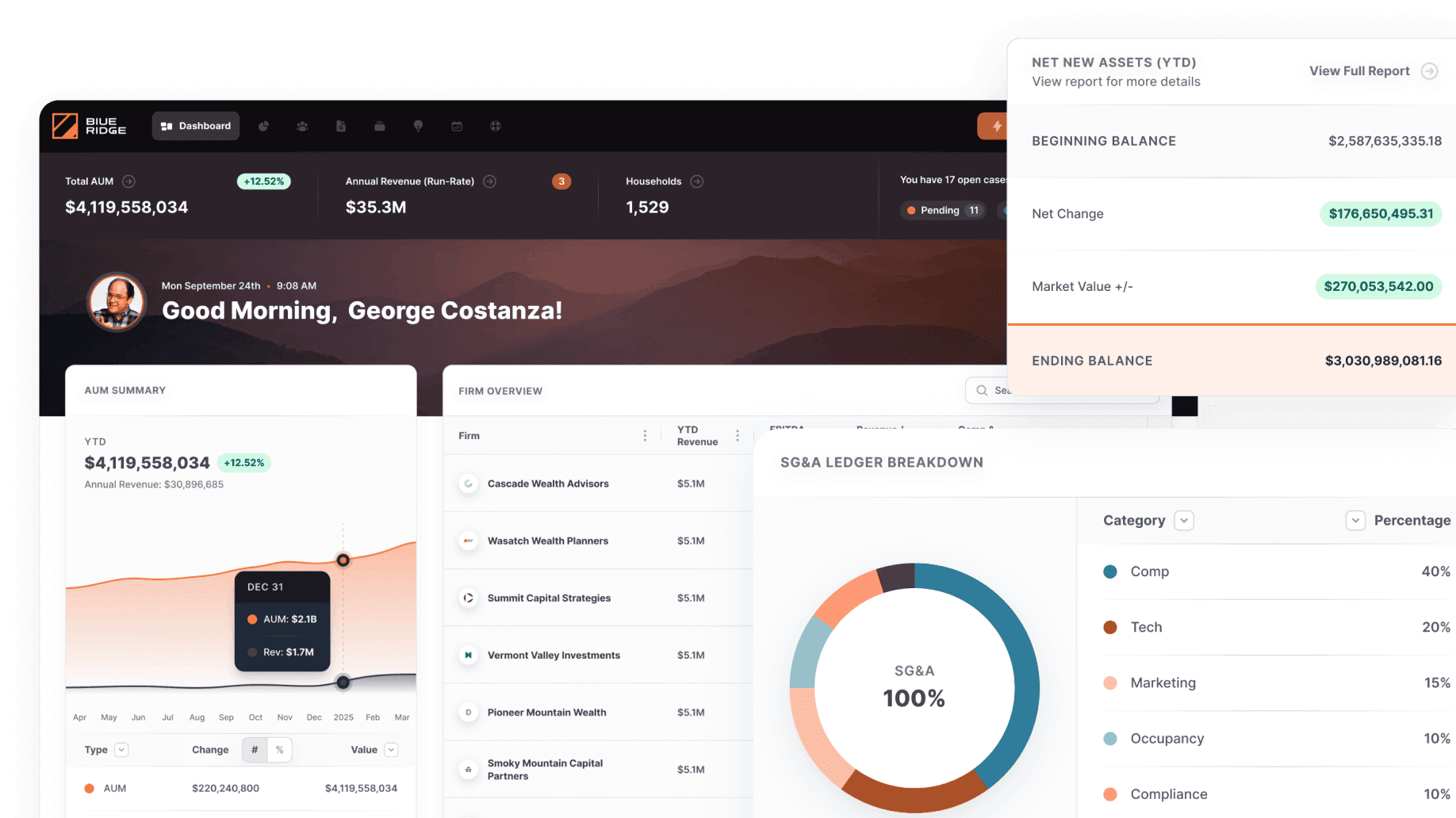
Universal Rule Engine
Payouts calculate automatically as revenue flows in
Grid schedules, overrides, bonuses, draws — all automated
Unlimited exception types & special arrangements
Rules that adapt as your business grows
Universal Rule Engine
Payouts calculate automatically as revenue flows in
Grid schedules, overrides, bonuses, draws — all automated
Unlimited exception types & special arrangements
Rules that adapt as your business grows
Real-Time Calculations
Payouts calculate automatically as revenue flows in
Advisors see live previews of their compensation
No more month-end scrambling or calculation errors
Instant impact analysis of compensation changes
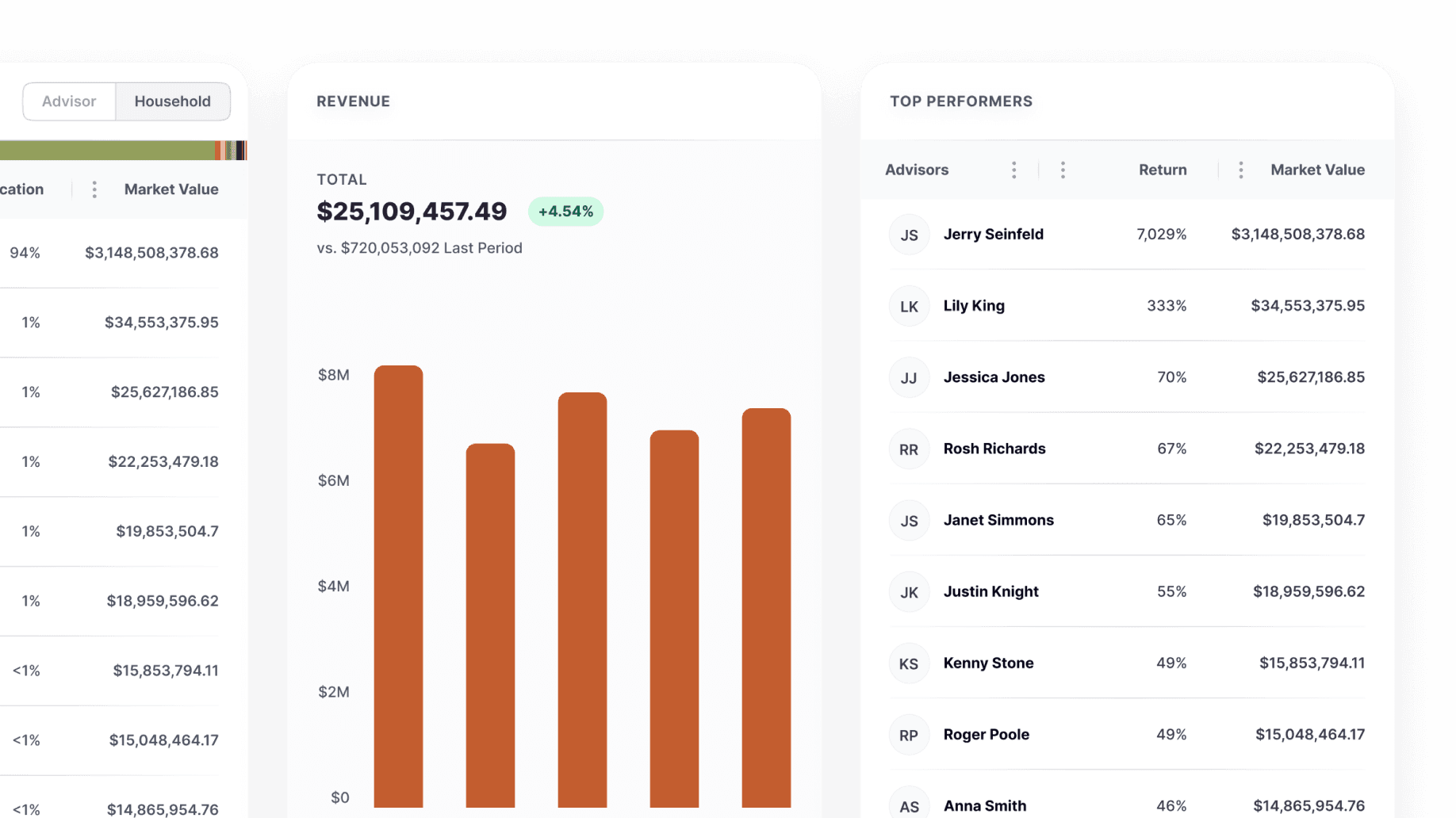
Real-Time Calculations
Payouts calculate automatically as revenue flows in
Advisors see live previews of their compensation
No more month-end scrambling or calculation errors
Instant impact analysis of compensation changes
Real-Time Calculations
Payouts calculate automatically as revenue flows in
Advisors see live previews of their compensation
No more month-end scrambling or calculation errors
Instant impact analysis of compensation changes
Transparency Dashboard
Advisors see exactly how their pay is calculated
Detailed breakdowns of every component
Historical payout tracking & trending
Dispute resolution with complete audit trails

Transparency Dashboard
Advisors see exactly how their pay is calculated
Detailed breakdowns of every component
Historical payout tracking & trending
Dispute resolution with complete audit trails
Exception Management
Transition bonuses for new advisors
Retention deals & vesting schedules
Team-based overrides & splits
One-off arrangements & special terms
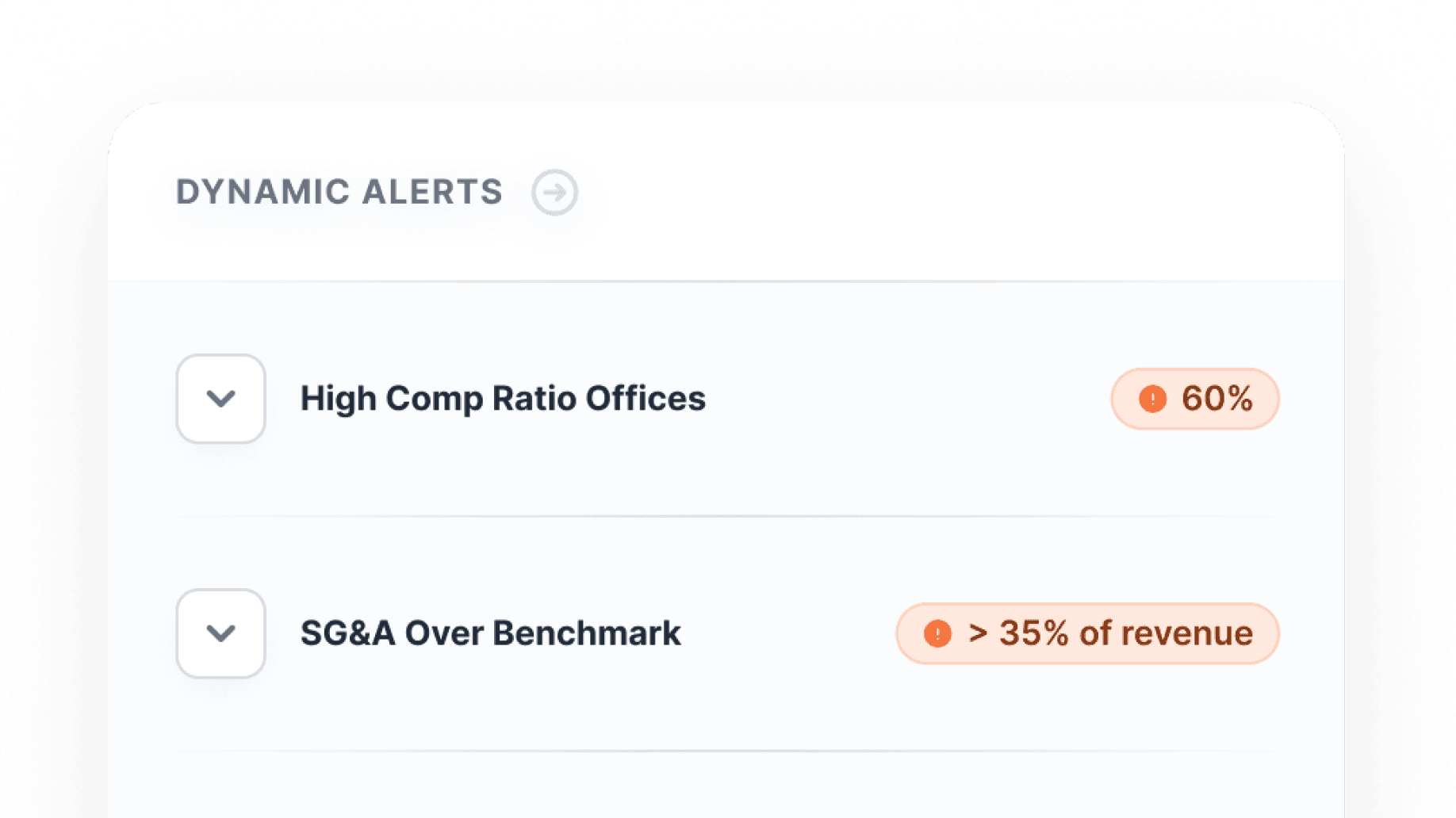
Exception Management
Transition bonuses for new advisors
Retention deals & vesting schedules
Team-based overrides & splits
One-off arrangements & special terms
Multi-Advisor Support
Handle hundreds of unique compensation plans
Team-based splits & hierarchical overrides
Geographic & product-based variations
Acquisition integration for new advisor terms

Multi-Advisor Support
Handle hundreds of unique compensation plans
Team-based splits & hierarchical overrides
Geographic & product-based variations
Acquisition integration for new advisor terms
The Transformation
The Transformation
Before Compensation Management
Before Compensation Management
Month-End Payouts = 40 Hours Of Spreadsheet Hell
Advisor Questions = “Let Me Check My Calculations”
New Advisor Onboarding = Recreate Compensation Logic
Compensation Disputes = He-Said-She-Said Arguments
New account opening = 2 weeks, 6 systems, 47 manual steps
Approval process = email ping-pong and hope
Help desk = "have you tried turning it off and on again?"
Process visibility = "let me get back to you"
New account opening = 2 weeks, 6 systems, 47 manual steps
Approval process = email ping-pong and hope
Help desk = "have you tried turning it off and on again?"
Process visibility = "let me get back to you"


After Compensation Management
After Compensation Management
Month-End Payouts
Click Calculate, Review, Approve
Advisor Questions
“Check Your Dashboard”
New Advisor Onboarding
Configure Rules Once, Calculate Forever
Compensation Disputes
Complete Transparency Eliminates Arguments
" Every conference I’ve gone to for the last 15 years same complaint the quality of the data where it’s located how it’s siloed but Milemarker™ is working on something to help fix that for lots of RIAs. "

Jason Pereira
Senior Partner at Woodgate Financial, Inc
" Every conference I’ve gone to for the last 15 years same complaint the quality of the data where it’s located how it’s siloed but Milemarker™ is working on something to help fix that for lots of RIAs. "
Jason Pereira
Senior Partner at Woodgate Financial, Inc
" Every conference I’ve gone to for the last 15 years same complaint the quality of the data where it’s located how it’s siloed but Milemarker™ is working on something to help fix that for lots of RIAs. "
Jason Pereira
Senior Partner at Woodgate Financial, Inc
90%
Reduction In Payout Calculation Time
90%
Reduction In Payout Calculation Time
95%
Fewer Advisor Payout Inquiries
95%
Fewer Advisor Payout Inquiries
Zero
Compensation Calculation Errors
Zero
Compensation Calculation Errors
Complete
Audit Trail For Every Payment
Complete
Audit Trail For Every Payment
Compensation Management
Advanced Features
Dynamic grid management
Time-based grid changes & promotions
Performance-based tier adjustments
Automatic recalculation when grids change
Historical grid tracking for audit purposes
Dynamic grid management
Time-based grid changes & promotions
Performance-based tier adjustments
Automatic recalculation when grids change
Historical grid tracking for audit purposes
Dynamic grid management
Time-based grid changes & promotions
Performance-based tier adjustments
Automatic recalculation when grids change
Historical grid tracking for audit purposes
Team-based compensation
Hierarchical overrides & management bonuses
Team production aggregation & splits
Cross-team collaboration incentives
Leadership compensation tied to team performance
Team-based compensation
Hierarchical overrides & management bonuses
Team production aggregation & splits
Cross-team collaboration incentives
Leadership compensation tied to team performance
Team-based compensation
Hierarchical overrides & management bonuses
Team production aggregation & splits
Cross-team collaboration incentives
Leadership compensation tied to team performance
Draw & advance management
Draw against future commissions
Advance repayment tracking & automation
New advisor transition support
Recovery scheduling & management
Draw & advance management
Draw against future commissions
Advance repayment tracking & automation
New advisor transition support
Recovery scheduling & management
Draw & advance management
Draw against future commissions
Advance repayment tracking & automation
New advisor transition support
Recovery scheduling & management
Compensation Management
Built For Complex Firms
Acquisition Integration
Seamlessly integrate acquired advisors with their existing compensation terms. No disruption to their pay structure.
Acquisition Integration
Connect Investment Decisions To Trade Execution
Automatic Allocation & Rebalancing
Real-Time Funding Alerts & Cash Management
Direct Integration With Your Trading Platform
Acquisition Integration
Seamlessly integrate acquired advisors with their existing compensation terms. No disruption to their pay structure.
Multi-Entity Support
Handle different compensation structures across offices, regions, or business lines. Unified reporting with distributed rules.
Multi-Entity Support
Comprehensive Performance Tracking Across All Investments
Risk Analytics & Attribution Reporting
Custom Benchmarking & Peer Comparisons
Client-Ready Performance Summaries
Multi-Entity Support
Handle different compensation structures across offices, regions, or business lines. Unified reporting with distributed rules.
Regulatory Compliance
Built-in compliance checks for compensation regulations. Automatic documentation for regulatory review.
Regulatory Compliance
Connect Investment Decisions To Trade Execution
Automatic Allocation & Rebalancing
Real-Time Funding Alerts & Cash Management
Direct Integration With Your Trading Platform
Regulatory Compliance
Built-in compliance checks for compensation regulations. Automatic documentation for regulatory review.
Scalable Architecture
Add advisors, create new compensation plans, implement complex arrangements—all without breaking existing calculations.
Scalable Architecture
Comprehensive Performance Tracking Across All Investments
Risk Analytics & Attribution Reporting
Custom Benchmarking & Peer Comparisons
Client-Ready Performance Summaries
Scalable Architecture
Add advisors, create new compensation plans, implement complex arrangements—all without breaking existing calculations.
Compensation Management
Integration & Data Flow
CRM Integration
Pull advisor hierarchy, client assignments, and relationship data directly from your CRM system.
CRM Integration
Pull advisor hierarchy, client assignments, and relationship data directly from your CRM system.
Revenue Systems
Connect to custodians, billing platforms, and trading systems for real-time revenue tracking.
Revenue Systems
Connect to custodians, billing platforms, and trading systems for real-time revenue tracking.
Payroll Integration
Export calculated compensation directly to your payroll system. No manual entry required.
Payroll Integration
Export calculated compensation directly to your payroll system. No manual entry required.
Accounting Sync
Automated journal entries and expense allocation for accurate financial reporting.
Accounting Sync
Automated journal entries and expense allocation for accurate financial reporting.
CRM Integration
Pull advisor hierarchy, client assignments, and relationship data directly from your CRM system.
Payroll Integration
Export calculated compensation directly to your payroll system. No manual entry required.
Revenue Systems
Connect to custodians, billing platforms, and trading systems for real-time revenue tracking.
Accounting Sync
Automated journal entries and expense allocation for accurate financial reporting.
Automate the complexity. Build the trust.
Why This Matters
Compensation disputes kill advisor relationships. Manual calculations kill your time. Complex exceptions kill your growth.
Stop Being The Compensation Bottleneck.
Stop Being The Compensation Bottleneck.
Stop Being The Compensation Bottleneck.
Stop Explaining Why The Math Is Different Every Month.
Stop Explaining Why The Math Is Different Every Month.
Stop Explaining Why The Math Is Different Every Month.
Stop Losing Advisors To Compensation Confusion.
Stop Losing Advisors To Compensation Confusion.
Stop Losing Advisors To Compensation Confusion.
Frequently asked questions.
Can’t find what you’re looking for? Reach out to our team at hello@milemarker.co
What is Milemarker?
Milemarker is a data infrastructure platform built for wealth management. It connects more than 690 data sources — custodians, CRMs, portfolio accounting, financial planning, billing, and compliance systems — and reconciles them into a single data lake your firm owns. Firms use it to report revenue across custodians, track advisor productivity, reconcile billing and fees, and put clean data behind AI.
Who is Milemarker built for?
Milemarker serves RIAs and family offices, independent broker-dealers, banks and trust companies, insurance carriers, private equity–backed platforms and aggregators, TAMPs and OCIOs, fund managers, and asset managers. The problem is the same across all of them: client, account, position, and revenue data sits in systems that were never designed to talk to each other, and no one can answer a basic question about the business without an export.
Does Milemarker replace our current technology stack?
No. Milemarker connects the systems you already use without requiring you to replace them. Advisors continue using their existing CRM, portfolio platform, and planning tools — Milemarker normalizes and unifies the data underneath.
How long does implementation take?
Implementations run between 2 and 12 weeks. Where a firm lands in that range depends on scope and on how quickly your team picks up Milemarker MCP — teams that lean on it move fastest.
Milemarker stays hands-on throughout, because the goal is for your team to run the platform rather than depend on ours. Every firm gets a success manager dedicated to making sure your business goals are met, working sessions every other week, training sessions, monthly partner calls, regular release notes, and full documentation.
What does Milemarker do with my firm's data?
Milemarker reads from the systems your firm already runs, normalizes each source into a consistent structure, and reconciles them into one record. That record lives in your firm's own governed environment, not a shared vendor database. You keep the raw feeds, the normalized tables, and the logic that produced them. Milemarker never uses your data to train AI models, and it is never for sale.
Does Milemarker train AI models on my client data?
No. At Milemarker we want to be absolutely clear: your data is yours. We treat it as sacred, we never use it to train AI models, and it is never for sale. Your firm's data sits in a governed environment scoped to your firm, with access controlled by your own roles and permissions.
What happens to my data if we stop using Milemarker?
You own your data. That does not change when the relationship does — your firm's data is yours during the engagement and yours afterward. It is never sold, and it is never used to train AI models.
Where does my firm's data live, and who can access it?
Your data lands in a governed environment scoped to your firm, with access controlled by your own roles and permissions rather than shared across customers. Milemarker runs on redundant infrastructure across three cloud providers and monitors it continuously. Data residency controls, right to deletion, and privacy-first defaults are built in, and the platform is GDPR compliant.
Is Milemarker SOC 2 certified?
Yes. Milemarker is SOC 2 certified, and is currently pursuing ISO 42001 certification for AI management systems. Data residency controls, right to deletion, and privacy-first defaults are built into the platform, which runs on redundant infrastructure across three cloud providers under continuous monitoring.
What systems does Milemarker connect to?
More than 690 data connections, spanning custodians, CRMs, portfolio accounting and performance systems, financial planning tools, billing and revenue platforms, document management, and compliance systems. Milemarker builds and maintains these connections directly and partners with third-party providers to extend them, so the catalog grows continuously. Connections specific to wealth management — the systems generalist data tools tend not to cover — are the deliberate focus.
Do I need engineers or an IT project to use Milemarker?
No. Milemarker builds and maintains the connections, so your firm does not write code, run extracts, or stand up infrastructure. Operations teams work in Milemarker directly — building reports, reconciling revenue, and changing what leadership sees without filing a ticket or waiting on a development cycle.
What makes a firm's data "AI-ready"?
Data is AI-ready when a model can answer a question about your business without a person first explaining where everything lives and which fields mean what. Most firms fail that test — their data is spread across systems with conflicting identifiers, inconsistent field names, and no shared definition of a household or a fee. Milemarker does the normalization and reconciliation up front, so AI works against one reconciled record instead of a dozen partial ones.
What is Milemarker MCP?
Milemarker MCP connects Claude directly to your firm's Milemarker environment. You describe the metric, table, chart, or dashboard you want in plain language, and it gets built against your real data — including the styling on top of it. It reads and builds; it cannot alter the underlying data.
Can I build reports by describing what I want?
Yes. Operations leaders at firms using Milemarker MCP build reconciled revenue views, quarterly fee forecasts, client health scoring, and leadership dashboards by describing them rather than specifying them for someone else to build. The work that used to wait on an engineering queue now happens the same day the question is asked.
Frequently asked questions.
Can’t find what you’re looking for? Reach out to our team at hello@milemarker.co
What is Milemarker?
Milemarker is a data infrastructure platform built for wealth management. It connects more than 690 data sources — custodians, CRMs, portfolio accounting, financial planning, billing, and compliance systems — and reconciles them into a single data lake your firm owns. Firms use it to report revenue across custodians, track advisor productivity, reconcile billing and fees, and put clean data behind AI.
Who is Milemarker built for?
Milemarker serves RIAs and family offices, independent broker-dealers, banks and trust companies, insurance carriers, private equity–backed platforms and aggregators, TAMPs and OCIOs, fund managers, and asset managers. The problem is the same across all of them: client, account, position, and revenue data sits in systems that were never designed to talk to each other, and no one can answer a basic question about the business without an export.
Does Milemarker replace our current technology stack?
No. Milemarker connects the systems you already use without requiring you to replace them. Advisors continue using their existing CRM, portfolio platform, and planning tools — Milemarker normalizes and unifies the data underneath.
How long does implementation take?
Implementations run between 2 and 12 weeks. Where a firm lands in that range depends on scope and on how quickly your team picks up Milemarker MCP — teams that lean on it move fastest.
Milemarker stays hands-on throughout, because the goal is for your team to run the platform rather than depend on ours. Every firm gets a success manager dedicated to making sure your business goals are met, working sessions every other week, training sessions, monthly partner calls, regular release notes, and full documentation.
What does Milemarker do with my firm's data?
Milemarker reads from the systems your firm already runs, normalizes each source into a consistent structure, and reconciles them into one record. That record lives in your firm's own governed environment, not a shared vendor database. You keep the raw feeds, the normalized tables, and the logic that produced them. Milemarker never uses your data to train AI models, and it is never for sale.
Does Milemarker train AI models on my client data?
No. At Milemarker we want to be absolutely clear: your data is yours. We treat it as sacred, we never use it to train AI models, and it is never for sale. Your firm's data sits in a governed environment scoped to your firm, with access controlled by your own roles and permissions.
What happens to my data if we stop using Milemarker?
You own your data. That does not change when the relationship does — your firm's data is yours during the engagement and yours afterward. It is never sold, and it is never used to train AI models.
Where does my firm's data live, and who can access it?
Your data lands in a governed environment scoped to your firm, with access controlled by your own roles and permissions rather than shared across customers. Milemarker runs on redundant infrastructure across three cloud providers and monitors it continuously. Data residency controls, right to deletion, and privacy-first defaults are built in, and the platform is GDPR compliant.
Is Milemarker SOC 2 certified?
Yes. Milemarker is SOC 2 certified, and is currently pursuing ISO 42001 certification for AI management systems. Data residency controls, right to deletion, and privacy-first defaults are built into the platform, which runs on redundant infrastructure across three cloud providers under continuous monitoring.
What systems does Milemarker connect to?
More than 690 data connections, spanning custodians, CRMs, portfolio accounting and performance systems, financial planning tools, billing and revenue platforms, document management, and compliance systems. Milemarker builds and maintains these connections directly and partners with third-party providers to extend them, so the catalog grows continuously. Connections specific to wealth management — the systems generalist data tools tend not to cover — are the deliberate focus.
Do I need engineers or an IT project to use Milemarker?
No. Milemarker builds and maintains the connections, so your firm does not write code, run extracts, or stand up infrastructure. Operations teams work in Milemarker directly — building reports, reconciling revenue, and changing what leadership sees without filing a ticket or waiting on a development cycle.
What makes a firm's data "AI-ready"?
Data is AI-ready when a model can answer a question about your business without a person first explaining where everything lives and which fields mean what. Most firms fail that test — their data is spread across systems with conflicting identifiers, inconsistent field names, and no shared definition of a household or a fee. Milemarker does the normalization and reconciliation up front, so AI works against one reconciled record instead of a dozen partial ones.
What is Milemarker MCP?
Milemarker MCP connects Claude directly to your firm's Milemarker environment. You describe the metric, table, chart, or dashboard you want in plain language, and it gets built against your real data — including the styling on top of it. It reads and builds; it cannot alter the underlying data.
Can I build reports by describing what I want?
Yes. Operations leaders at firms using Milemarker MCP build reconciled revenue views, quarterly fee forecasts, client health scoring, and leadership dashboards by describing them rather than specifying them for someone else to build. The work that used to wait on an engineering queue now happens the same day the question is asked.
Frequently asked questions.
Can’t find what you’re looking for? Reach out to our team at hello@milemarker.co
What is Milemarker?
Milemarker is a data infrastructure platform built for wealth management. It connects more than 690 data sources — custodians, CRMs, portfolio accounting, financial planning, billing, and compliance systems — and reconciles them into a single data lake your firm owns. Firms use it to report revenue across custodians, track advisor productivity, reconcile billing and fees, and put clean data behind AI.
Who is Milemarker built for?
Milemarker serves RIAs and family offices, independent broker-dealers, banks and trust companies, insurance carriers, private equity–backed platforms and aggregators, TAMPs and OCIOs, fund managers, and asset managers. The problem is the same across all of them: client, account, position, and revenue data sits in systems that were never designed to talk to each other, and no one can answer a basic question about the business without an export.
Does Milemarker replace our current technology stack?
No. Milemarker connects the systems you already use without requiring you to replace them. Advisors continue using their existing CRM, portfolio platform, and planning tools — Milemarker normalizes and unifies the data underneath.
How long does implementation take?
Implementations run between 2 and 12 weeks. Where a firm lands in that range depends on scope and on how quickly your team picks up Milemarker MCP — teams that lean on it move fastest.
Milemarker stays hands-on throughout, because the goal is for your team to run the platform rather than depend on ours. Every firm gets a success manager dedicated to making sure your business goals are met, working sessions every other week, training sessions, monthly partner calls, regular release notes, and full documentation.
What does Milemarker do with my firm's data?
Milemarker reads from the systems your firm already runs, normalizes each source into a consistent structure, and reconciles them into one record. That record lives in your firm's own governed environment, not a shared vendor database. You keep the raw feeds, the normalized tables, and the logic that produced them. Milemarker never uses your data to train AI models, and it is never for sale.
Does Milemarker train AI models on my client data?
No. At Milemarker we want to be absolutely clear: your data is yours. We treat it as sacred, we never use it to train AI models, and it is never for sale. Your firm's data sits in a governed environment scoped to your firm, with access controlled by your own roles and permissions.
What happens to my data if we stop using Milemarker?
You own your data. That does not change when the relationship does — your firm's data is yours during the engagement and yours afterward. It is never sold, and it is never used to train AI models.
Where does my firm's data live, and who can access it?
Your data lands in a governed environment scoped to your firm, with access controlled by your own roles and permissions rather than shared across customers. Milemarker runs on redundant infrastructure across three cloud providers and monitors it continuously. Data residency controls, right to deletion, and privacy-first defaults are built in, and the platform is GDPR compliant.
Is Milemarker SOC 2 certified?
Yes. Milemarker is SOC 2 certified, and is currently pursuing ISO 42001 certification for AI management systems. Data residency controls, right to deletion, and privacy-first defaults are built into the platform, which runs on redundant infrastructure across three cloud providers under continuous monitoring.
What systems does Milemarker connect to?
More than 690 data connections, spanning custodians, CRMs, portfolio accounting and performance systems, financial planning tools, billing and revenue platforms, document management, and compliance systems. Milemarker builds and maintains these connections directly and partners with third-party providers to extend them, so the catalog grows continuously. Connections specific to wealth management — the systems generalist data tools tend not to cover — are the deliberate focus.
Do I need engineers or an IT project to use Milemarker?
No. Milemarker builds and maintains the connections, so your firm does not write code, run extracts, or stand up infrastructure. Operations teams work in Milemarker directly — building reports, reconciling revenue, and changing what leadership sees without filing a ticket or waiting on a development cycle.
What makes a firm's data "AI-ready"?
Data is AI-ready when a model can answer a question about your business without a person first explaining where everything lives and which fields mean what. Most firms fail that test — their data is spread across systems with conflicting identifiers, inconsistent field names, and no shared definition of a household or a fee. Milemarker does the normalization and reconciliation up front, so AI works against one reconciled record instead of a dozen partial ones.
What is Milemarker MCP?
Milemarker MCP connects Claude directly to your firm's Milemarker environment. You describe the metric, table, chart, or dashboard you want in plain language, and it gets built against your real data — including the styling on top of it. It reads and builds; it cannot alter the underlying data.
Can I build reports by describing what I want?
Yes. Operations leaders at firms using Milemarker MCP build reconciled revenue views, quarterly fee forecasts, client health scoring, and leadership dashboards by describing them rather than specifying them for someone else to build. The work that used to wait on an engineering queue now happens the same day the question is asked.
Ready to Automate Your Compensation?
Free analysis of your compensation complexity and automation opportunities.
Watch complex advisor payouts calculate automatically.
"/><stop offset="1" stop-color="rgb(240, 68, 56)"/></linearGradient></defs><path d="M 6 0 L 6 1.608 C 9.025 1.377 11.26 0.44 12 0 L 12 2.268 L 10.89 4.413 L 12 5.485 L 12 7.712 C 10.258 8.801 7.274 9.238 6 9.32 L 6 7.712 C 2.778 7.943 0.657 8.881 0 9.32 L 0 1.608 C 1.677 0.52 4.699 0.082 6 0 Z M 2.178 2.928 L 2.178 6.186 C 2.945 5.966 4.784 5.518 6 5.485 L 6 7.135 C 6.795 7.038 8.614 6.763 9.534 6.434 L 8.466 5.073 L 9.534 3.217 C 8.712 3.409 6.855 3.786 6 3.753 L 6 2.227 C 5.329 2.241 3.625 2.4 2.178 2.928 Z" fill="url(%23eYnNIpXV8-3782692587-linear-gradient)" height="9.320399999999998px" id="eYnNIpXV8" transform="translate(0.5 2)" width="12px"/></svg>)
30 minutes to design compensation automation for your firm.
Ready to Automate Your Compensation?
Free analysis of your compensation complexity and automation opportunities.
Watch complex advisor payouts calculate automatically.
30 minutes to design compensation automation for your firm.
Ready to Automate Your Compensation?
Free analysis of your compensation complexity and automation opportunities.
Watch complex advisor payouts calculate automatically.
30 minutes to design compensation automation for your firm.
Ready to Connect Your Stack?
30-minute consultation on your data strategy and requirements.
Watch a walkthrough of the platform in action.

Ready to Connect Your Stack?
30-minute consultation on your data strategy and requirements.
Watch a walkthrough of the platform in action.
Ready to Connect Your Stack?
30-minute consultation on your data strategy and requirements.
Watch a walkthrough of the platform in action.